Sourcing Transparency
Meet the Farmers
A name, a handshake, and a fair price behind every bag, because the people who grow our coffee aren't a line item.
We buy directly from the people who grow our coffee. Fair relationships, not anonymous transactions: the difference you can taste and the dignity you can stand behind.
“We shake the hand of the farmer” is more than a tagline.
It's a commitment: knowing where each bean comes from, paying fairly for it, and telling the grower's story alongside our own.
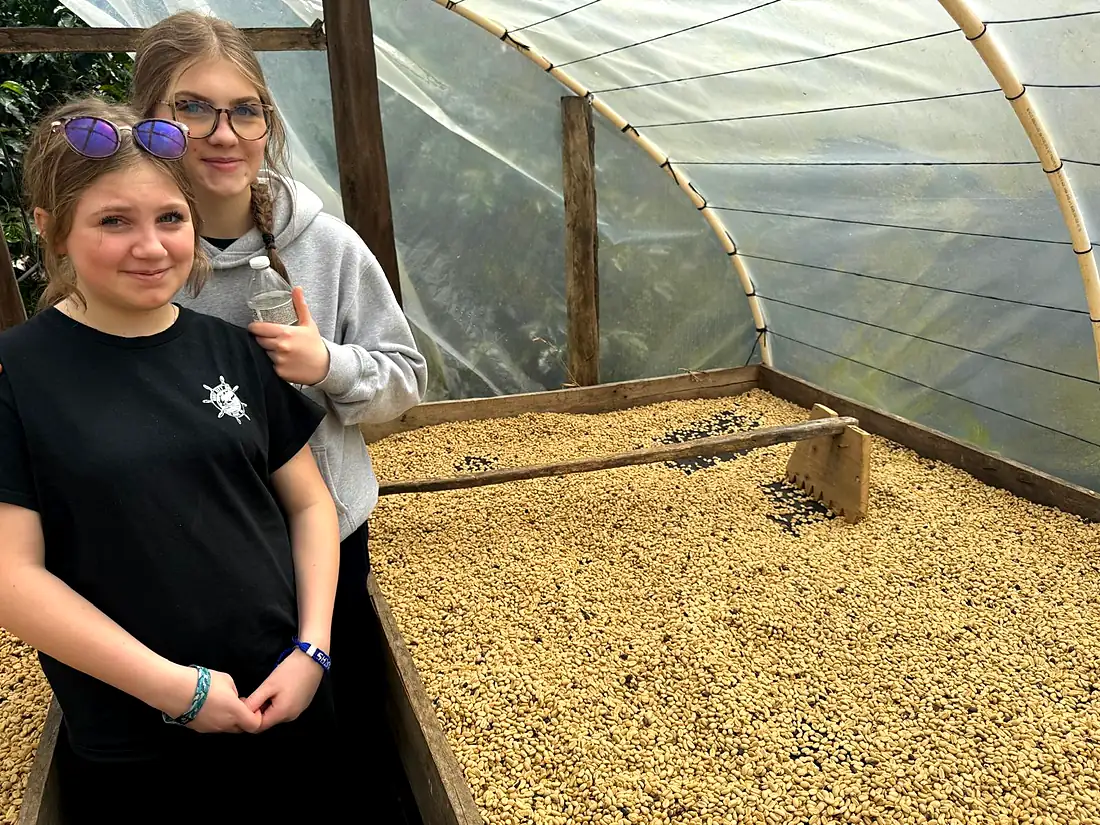
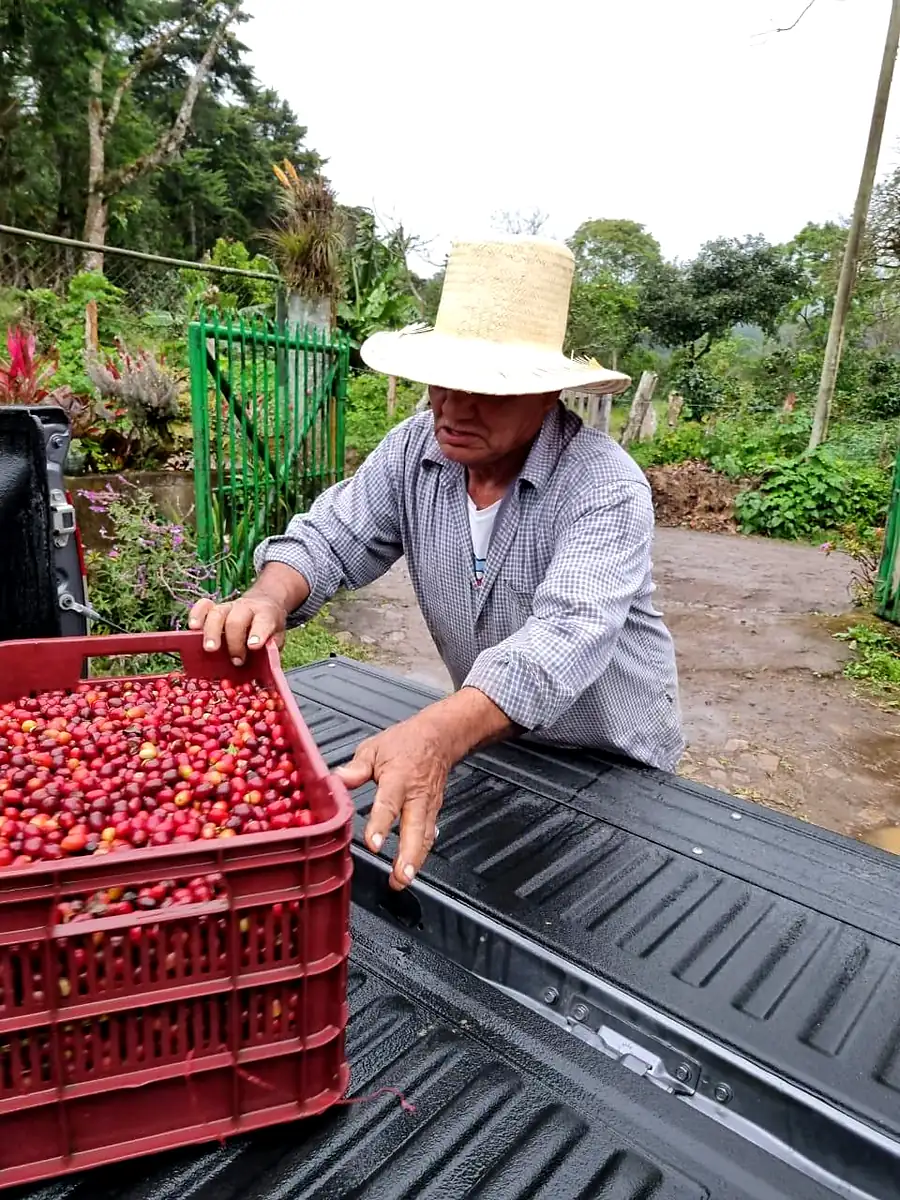
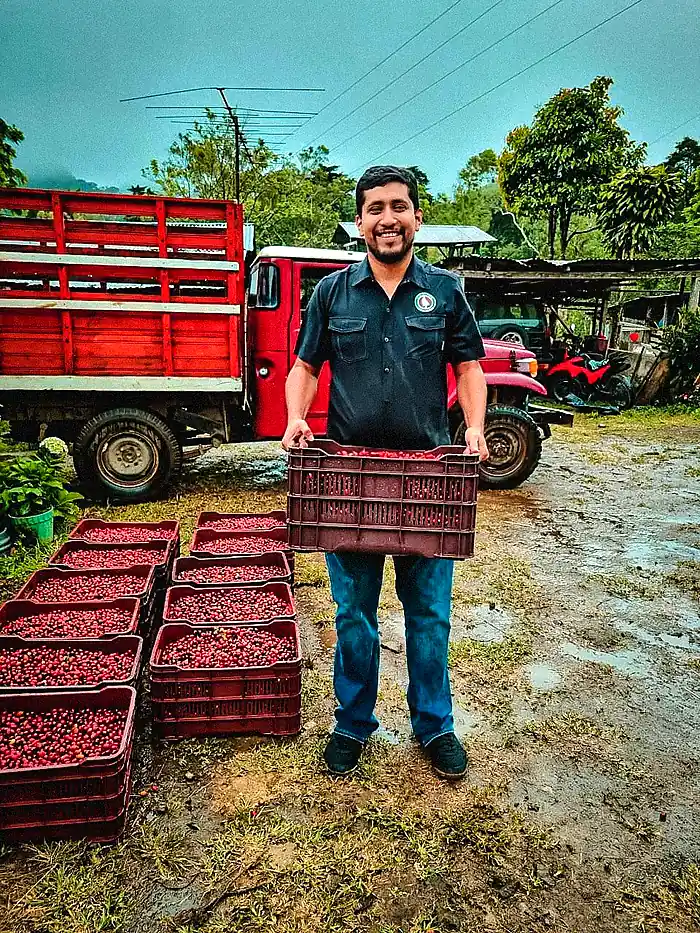
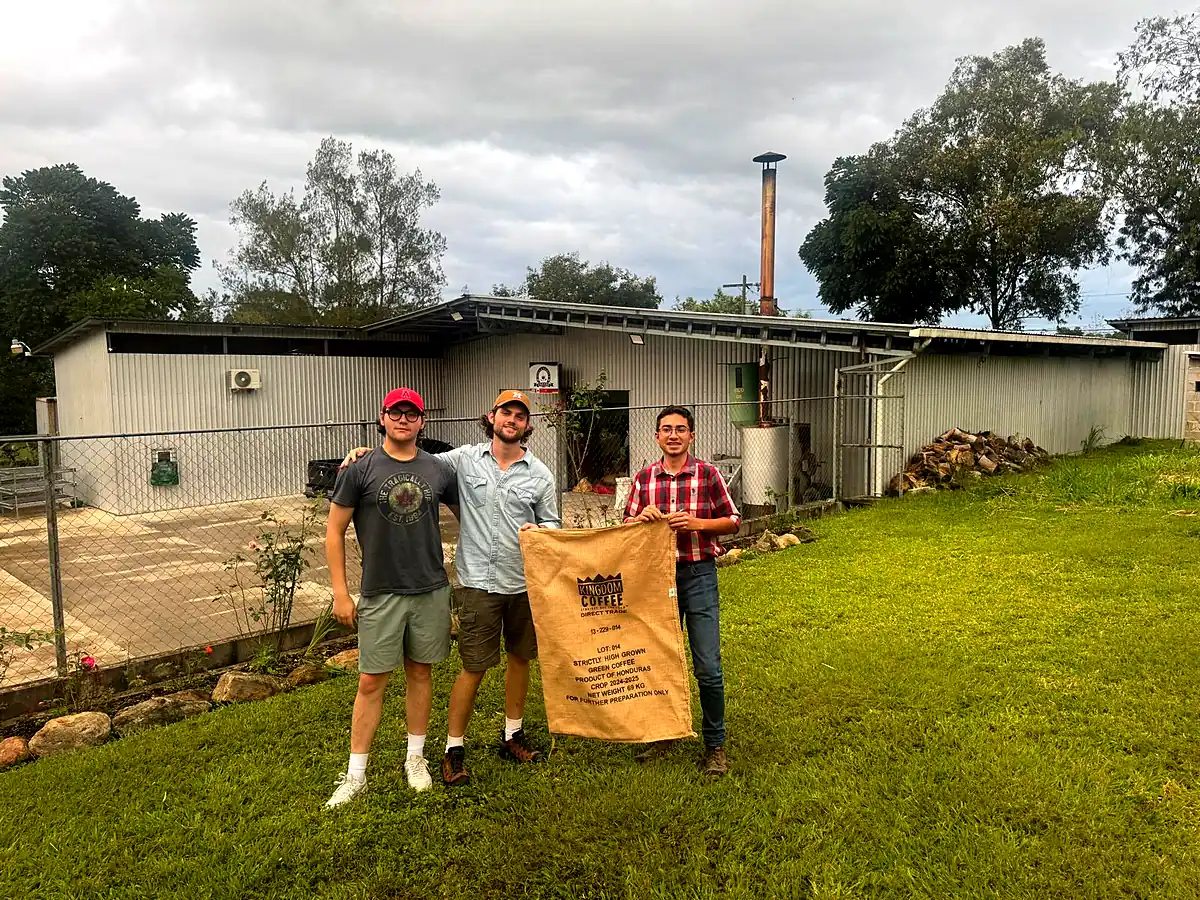
From cherry to crate: moments from origin
How it gets to you
Cherry to green.
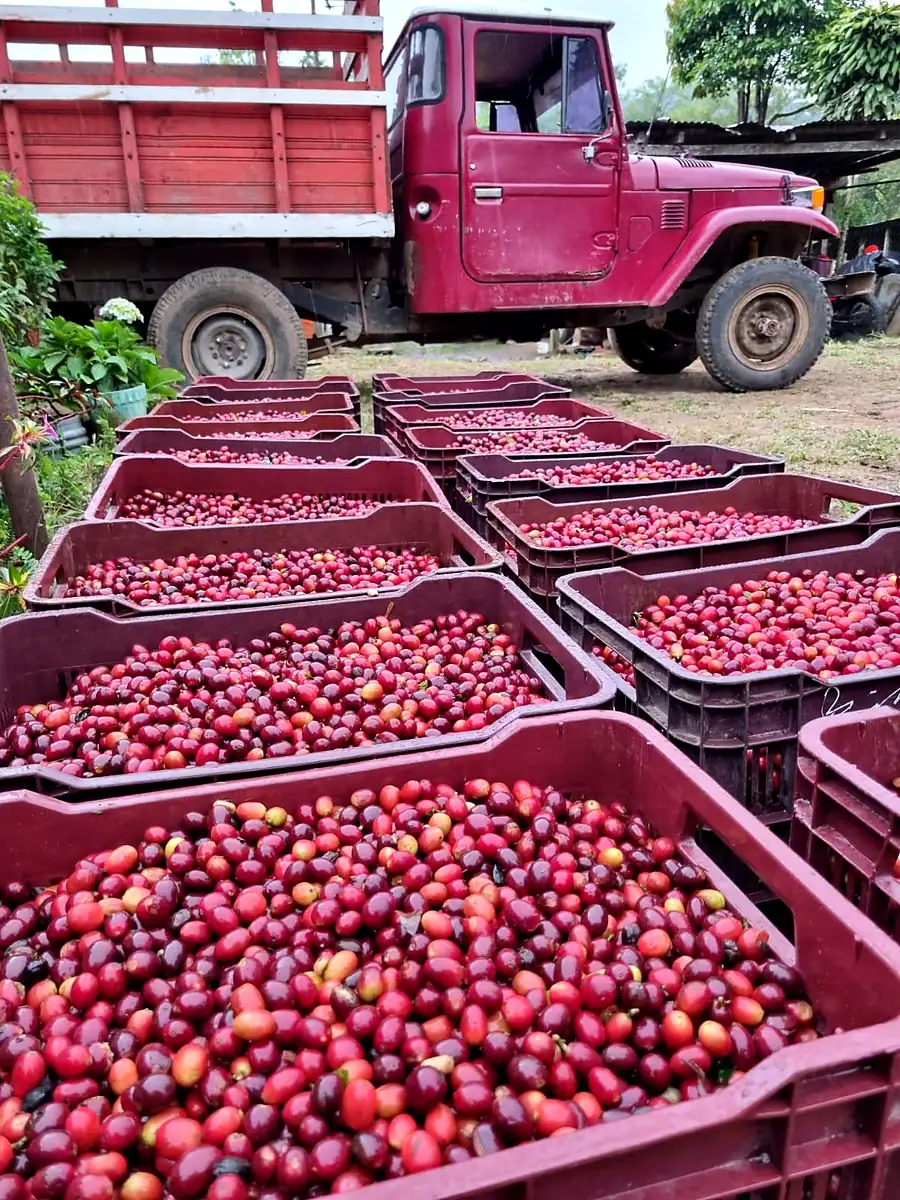
Four stages, all of them on the farm: picked ripe, dried in the sun, hulled, and sorted by hand before a single bean is roasted.
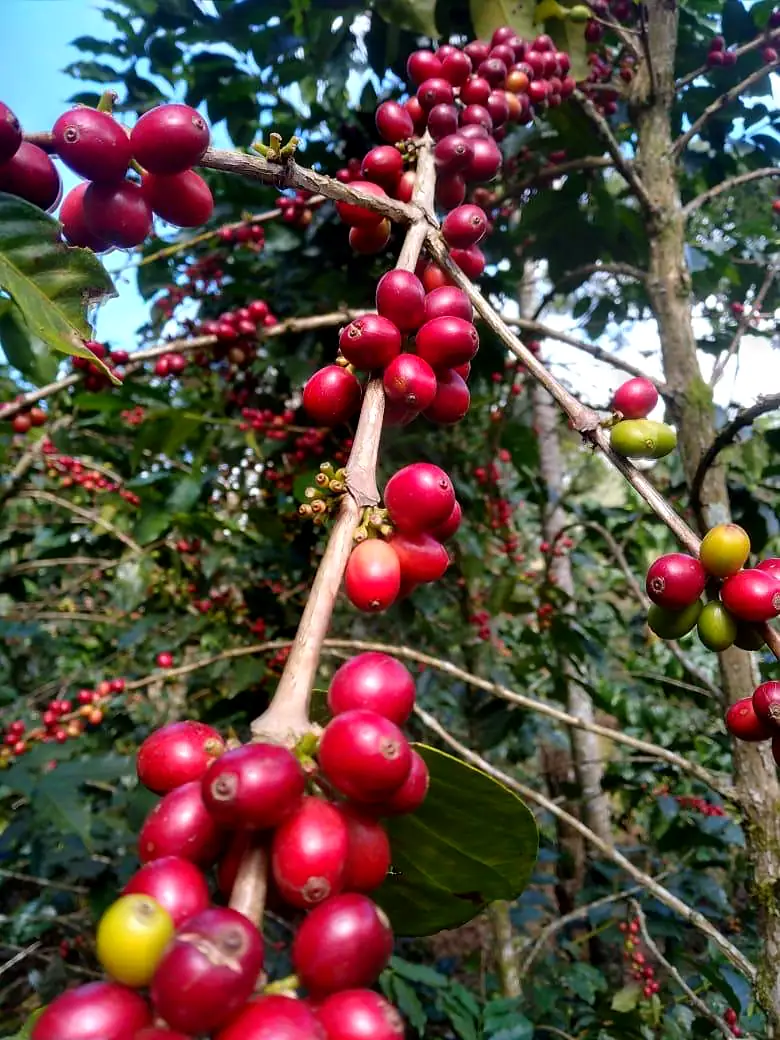
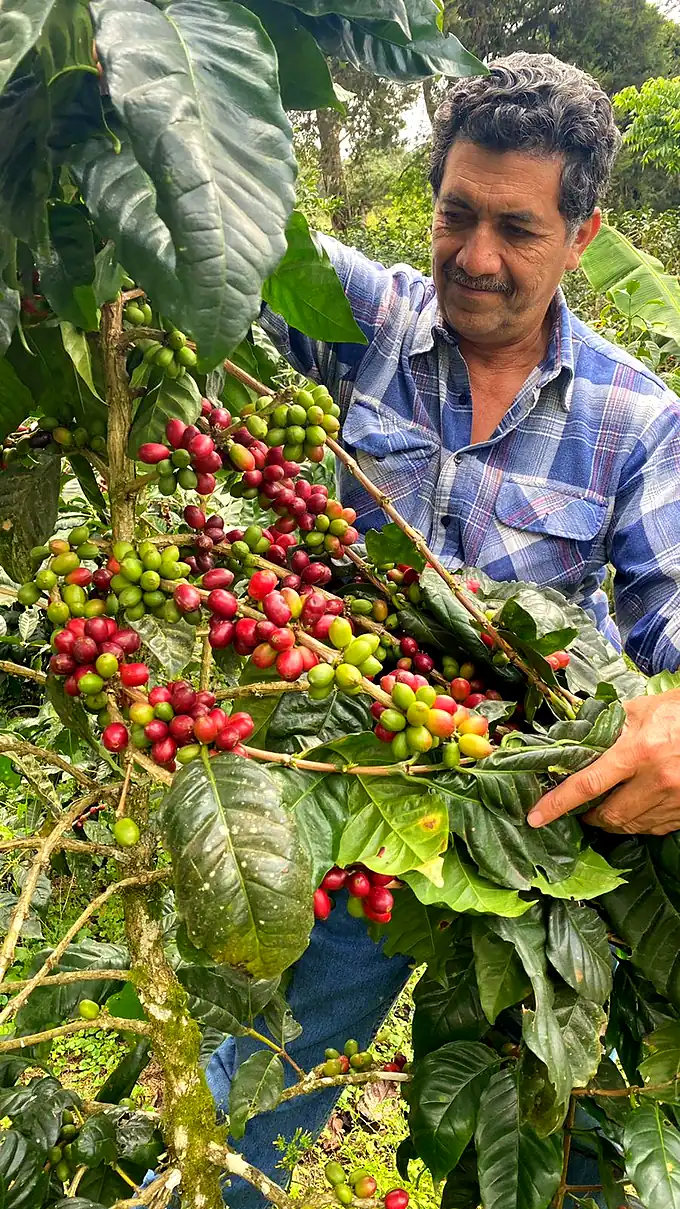
01On the branch
Picked only when the cherry is ripe and red: selective, by hand.
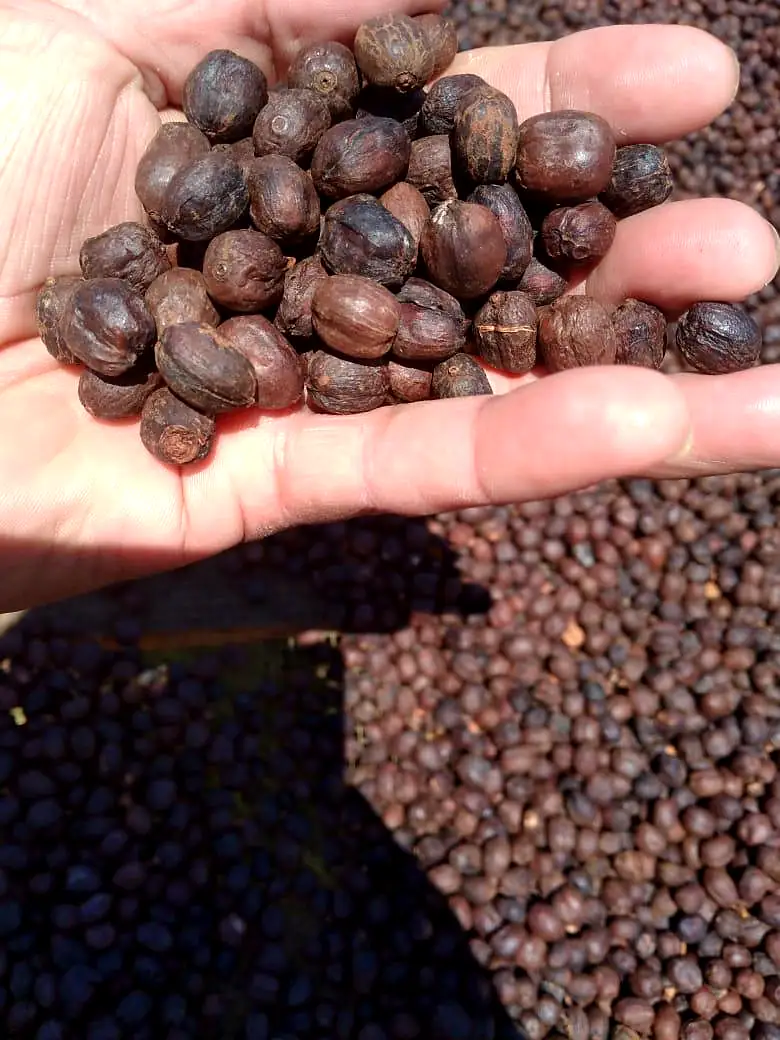
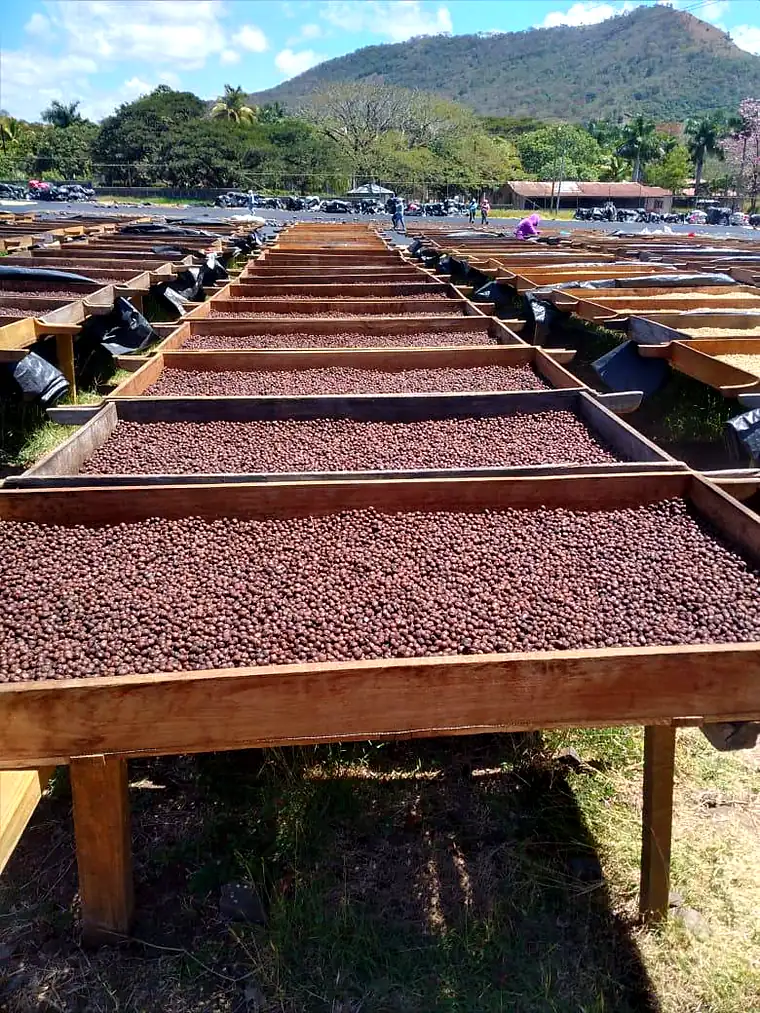
02Dried in the sun
Raked and turned on raised beds until the cherry dries to a husk.
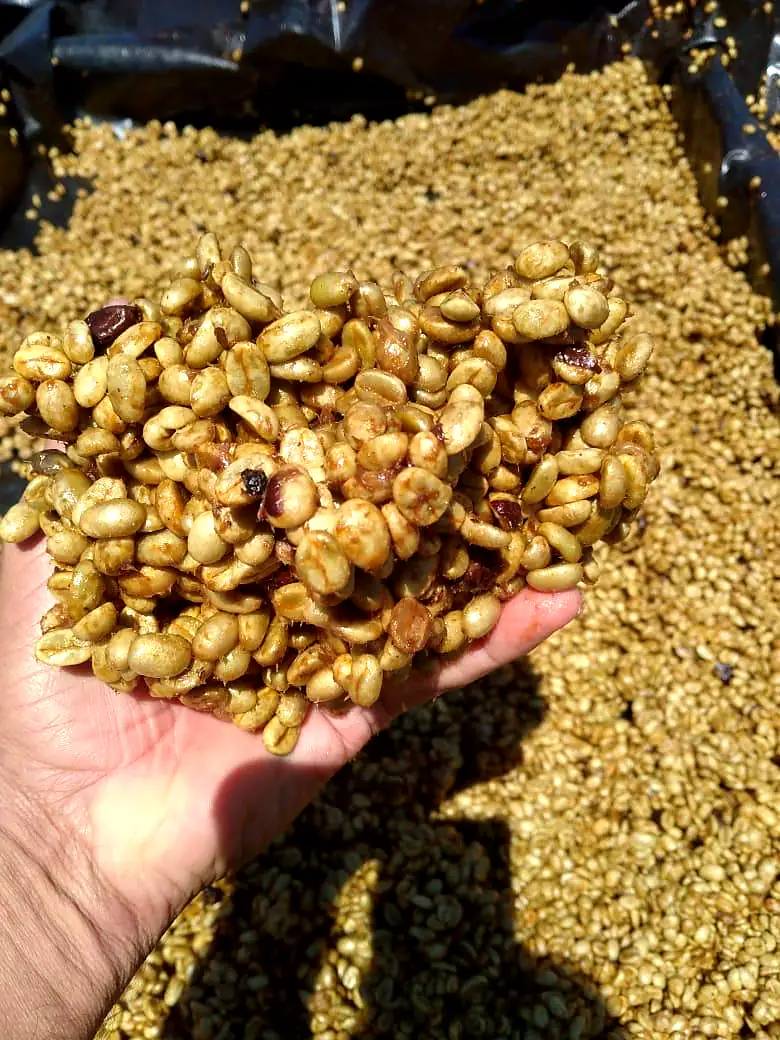
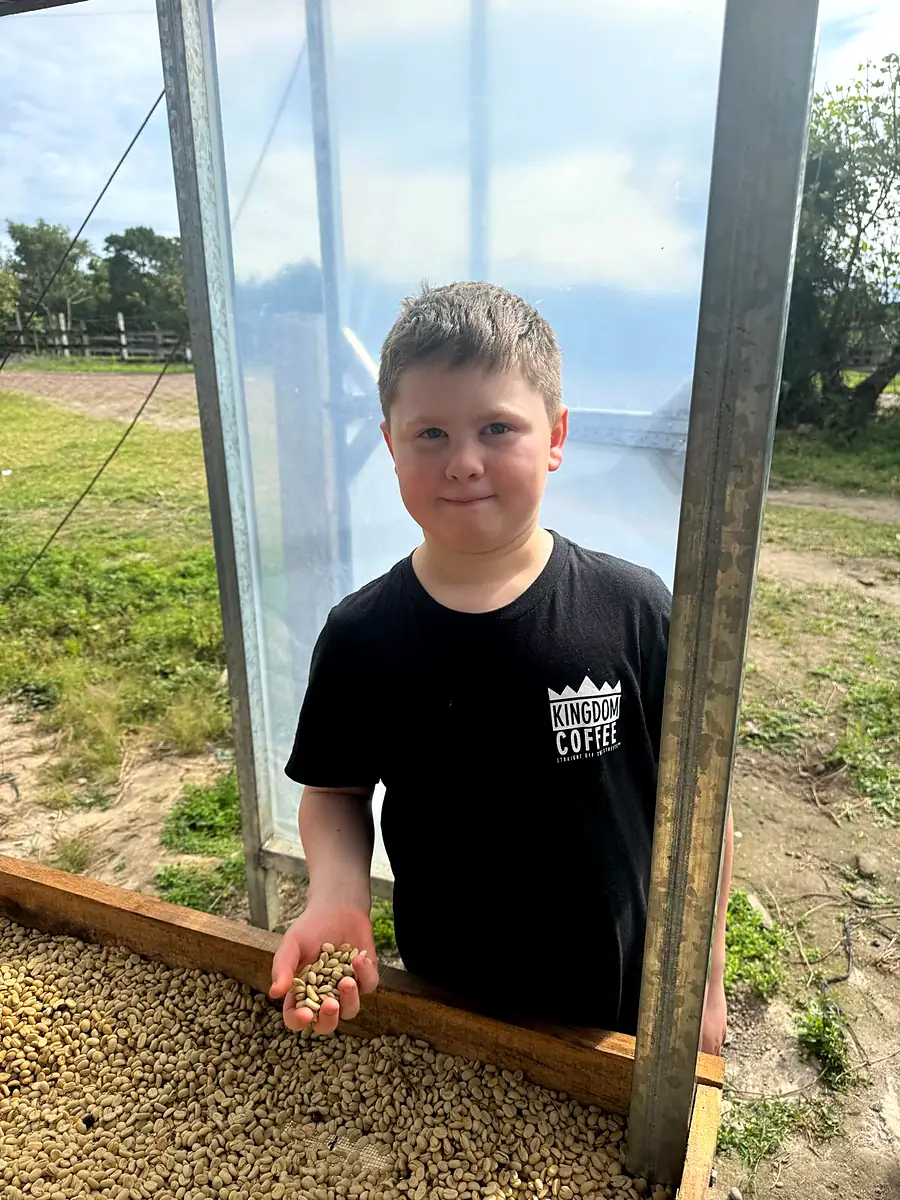
03Parchment
The dried fruit is hulled away, leaving the bean in its parchment layer.
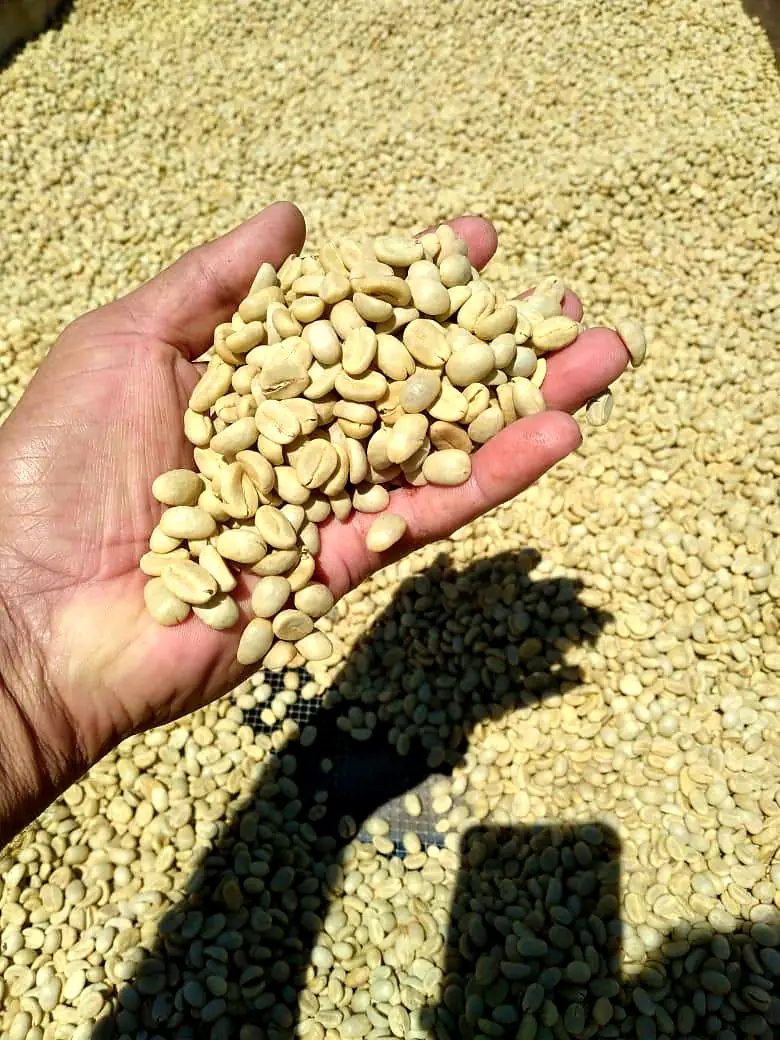
04Green bean
Sorted and graded: this is what we buy, and what we roast to order.
January 2019
How we met them.
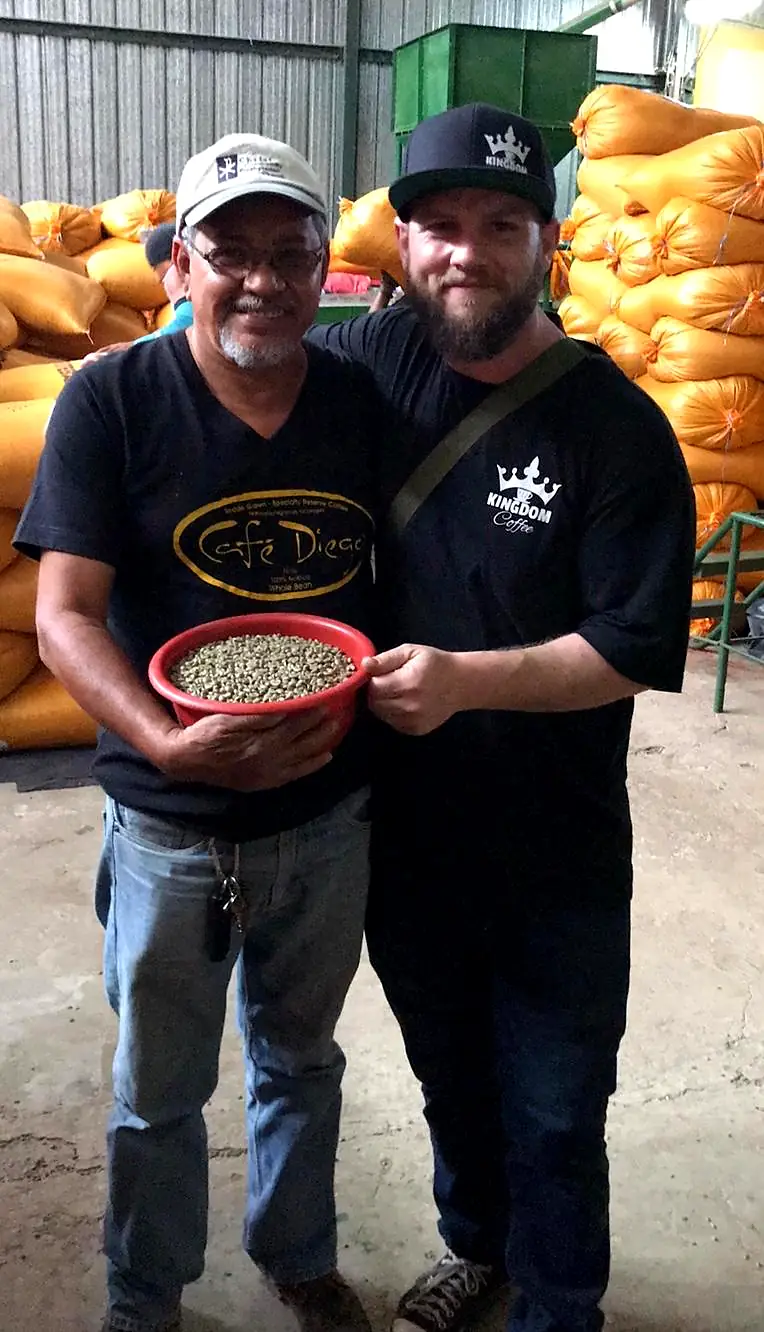
It started with a film. Someone sent us a short documentary about a coffee farmer in Nicaragua, and it stayed with us long enough that we made one phone call to Diego and started pricing flights.
A week before they left, a friend heard what they were doing and gave $10,000 to buy coffee from Diego outright, before anyone had shaken a hand or tasted a cup. Jesse and our friend Sem flew down on the strength of that one phone call, trusting it would come together once they landed.
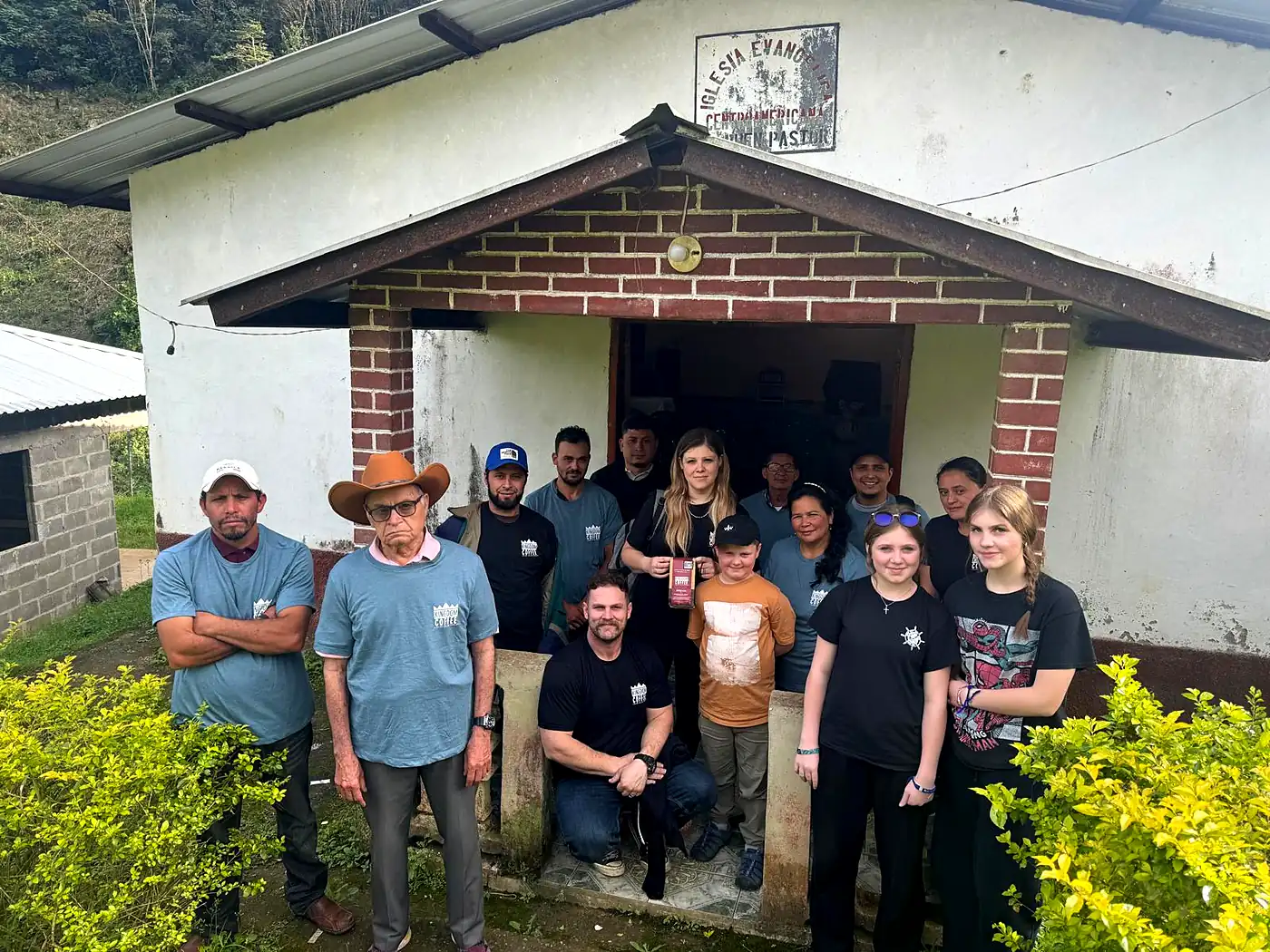
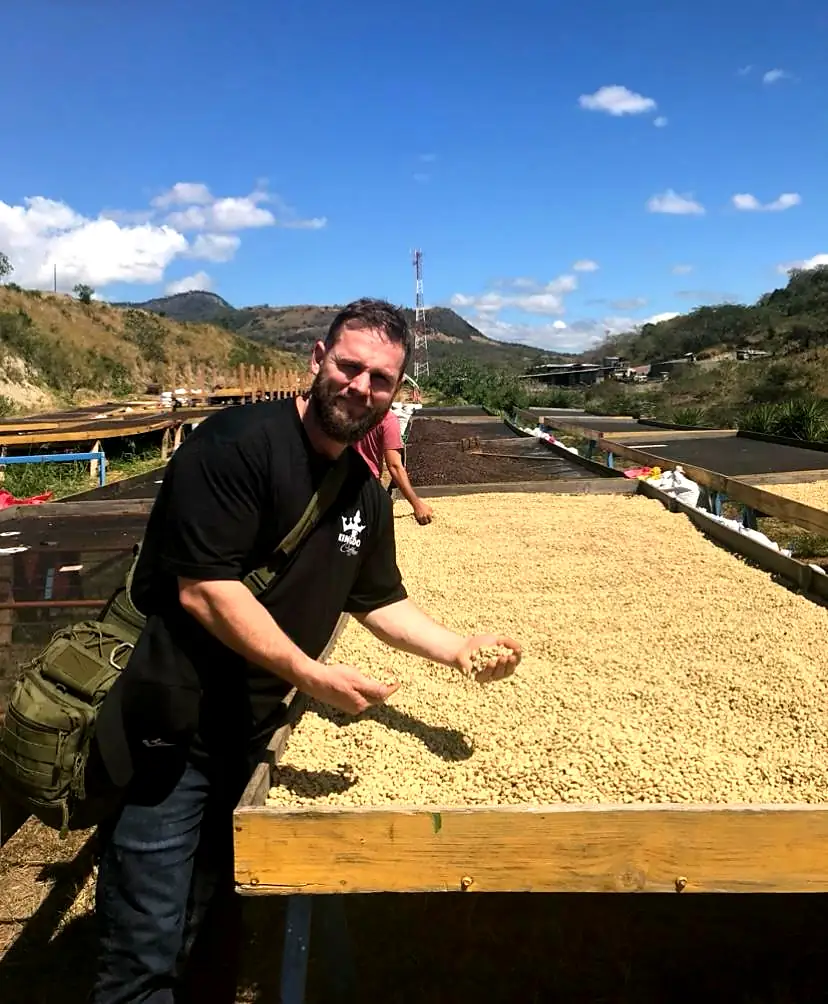
They stayed on the farm for a week and saw the whole of it: the picking, the drying, the families who live and work on the plantation and eat at Diego's expense every day. What was meant to be a sourcing trip turned into a friendship with Diego, his family and the people who work alongside him.
That trip also introduced us to someone we had not gone looking for. Through a chain of new introductions, Jesse and Sem met Byron Corrales. Jesse asked if they could pray, and everyone gathered and held hands, and as they prayed a cloud crossed the sun and the wind came up and cooled the air.
They told Byron what the coffee is for: loving people through the hardest stretches of their lives. He sent them home with a 152 lb bag of his best coffee, free, to be given away to people facing addiction and homelessness.
Who grows it
Three names, not a supply chain.
Diego Chavarria
El Dorado · Matagalpa, Nicaragua
~160,000 lbOrganic green, per year
Three hundred hectares in the mountains of Matagalpa, farmed by the same family across generations. It turns out roughly 160,000 pounds of organic green coffee a year.
The people who pick it are housed and fed by the farm, their families included. Diego has also planted more than forty churches across Nicaragua, the work he does with what the harvest returns.
Byron Corrales
Los Pinos · Nicaragua
152 lbGiven away, no charge
Byron grows organic specialty coffee and farms it the long way, conservation practices that cost him more now so the land is still worth farming later.
He was seven when his grandfather taught him to plant his first coffee tree, and he has farmed the same ground since.
He puts the people who work for him through post-secondary education. And he once sent 152 pounds of his first-class coffee, free, to be poured for people living with addiction and homelessness, coffee he could have sold at the top of the market.
Blossom Creek Co-op
Blossom Creek · Santa Barbara, Honduras
83Cup score
A co-operative in Santa Barbara growing between 1200 and 1600 metres, high enough that the cherry ripens slowly and the sugars have time to build.
Their washed arabica cups at 83 and comes to us as a single origin, the only coffee on our shelf that reaches your cup from one place, unblended.
In your cup asRise
In his own words
Byron Corrales on his farm
I was 7 years old when my grandfather taught me to plant my first coffee tree. I liked to look at the sun coming through the trees, to share the lessons my grandfather taught me about the growth of plants, and watch the rainfall and surrounded by the scent of the earth. I listened to the song of the birds and rode my horse to school every morning. 42 years have passed in my life since then and I want to transmit our family's art, our work of many years, discovering the flavors we've learned to bring forth from our mountains, expressed in this cup by way of respect for our environment and the songs we sing every day in our coffee farm.
I talk every day with my plants, and they ask me who will consume each bean of our production and in this moment when you are tasting our coffee, I want to talk with you and tell you in silence that you are contributing to the conservation of our planet, that this cup has come from the Arenal Forest Reserve, that its flavor that you're tasting on your palate is the expression of life and the life energy of all the living beings who live in our community. Now we are together in embraced by this moment celebrating with joy the responsibility of protecting the future of our generations.
The cup of responsibility is a song of love.
Byron Jose Corrales Martinez
More than a purchase order
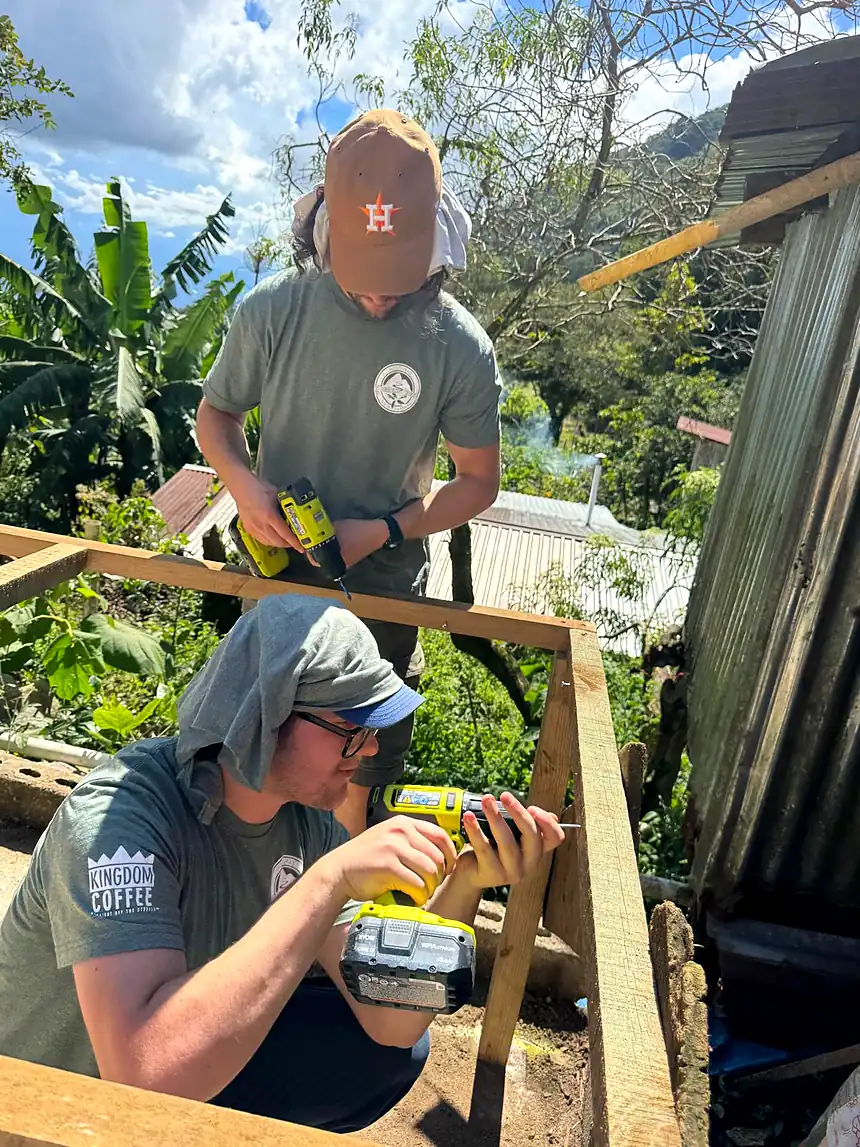
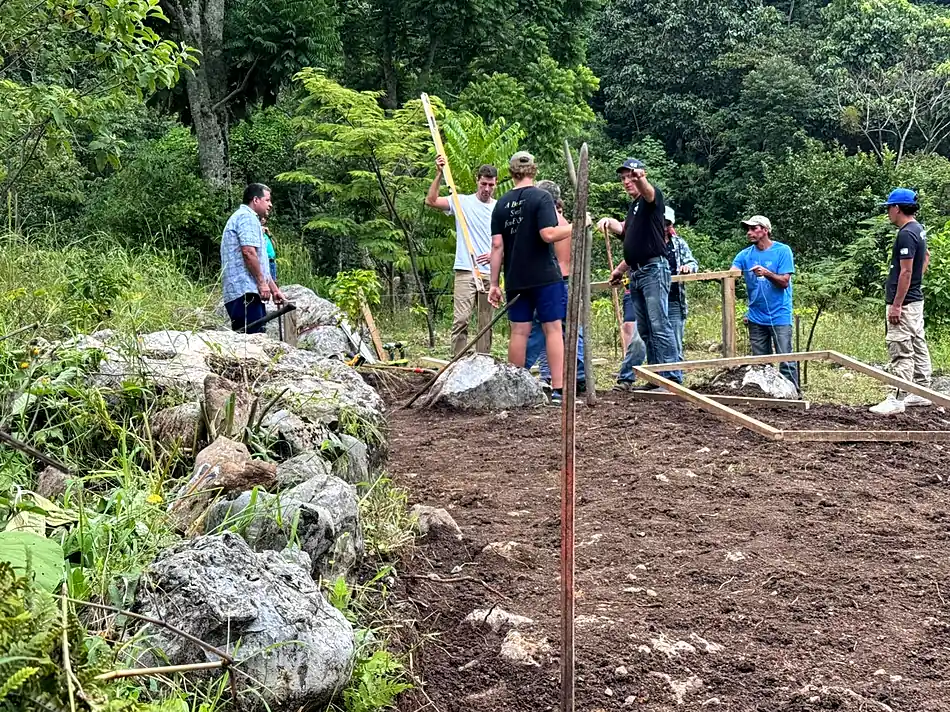
We show up with tools.
Buying the harvest is the easy part. We travel to the farms and build alongside the growers: drying beds, structures, whatever the next season needs, because a fair price only goes so far without the infrastructure to use it.
Taste what direct trade means.
Every blend on our shelf began as a relationship at origin. Pour a cup and you're part of it.
Shop the Blends